


Psychedelic Healing Intensives, Preparation & Integration

A Thoughtful, Trauma-Informed Approach to Psychedelic Healing

Some parts of healing happen through conversation. Others require a different kind of experience.

Psychedelic experiences can bring us into contact with emotions, memories, and parts of our story that are often harder to access through traditional therapy alone.

My role is to help you prepare for that work, make sense of what emerges, and determine what comes next. This can include ketamine-assisted psychotherapy, healing intensives, and clients seeking preparation and integration support for plant medicine ceremonies or retreats.

This work is for the curious, the seekers, and those who suspect there may be more to their story than they have understood so far.

Leah Hoffman outdoors holding a small bouquet of wildflowers in a field with trees behind.

Psychedelic Preparation & Integration

Support Before and After Psychedelic Experiences

A meaningful psychedelic experience doesn't always come with a clear roadmap.

Some clients seek support before an upcoming experience. Others come in afterward, trying to make sense of something that still feels emotionally charged, unresolved, or difficult
to understand.

Preparation and integration work often fits well alongside ketamine infusion treatments, upcoming plant medicine ceremonies, and other psychedelic experiences being used for therapeutic or spiritual growth. Like all of my work, my approach is relational, trauma-informed, and grounded in understanding the larger context of your life.

The work I offer is rooted in harm reduction, thoughtful preparation, and meaningful integration, with the goal of supporting people who are choosing to explore these experiences in ways that feel safe, intentional, and grounded. I do not provide, prescribe, or encourage the use of illegal substances.

Person in brown skirt holding small pink and white wildflowers behind their back in a grassy field.

Psychedelic Preparation

Preparation sessions may focus on:

  • Clarifying intentions: exploring what feels important, what you're hoping to understand, and what is drawing you toward the experience.
  • Exploring hopes, fears, and expectations: making space for excitement, uncertainty, questions, and concerns about what may emerge.
  • Understanding set and setting: discussing the internal and external factors that may shape the experience.
  • Creating a foundation: identifying important supports, concerns, and personal history that may be relevant to the work.

Preparation isn't about controlling the experience, it's about entering it thoughtfully.

Psychedelic Integration

Integration sessions may focus on:

  • Making sense of the experience: exploring symbols, metaphors, imagery, and moments that felt meaningful, confusing, or surprising.
  • Emotional processing: integrating both the challenging and awe-inspiring aspects of the experience, including fear, shame, joy, connection, self-compassion, or material that felt overwhelming.
  • Being witnessed: having space to feel heard, understood, and supported while talking through the experience.
  • Bringing it back into life: reconnecting with what was felt in the body and exploring how the experience fits into the larger story of your life.

Integration is about more than understanding the experience. It's about living it.

Leah Hoffman in denim shirt with rings, bracelets, and a pendant necklace, hands near her chest.

Healing Intensives

An Immersive Way to
Move Further into This Work

Sometimes the most meaningful work begins right when the session would normally end. Healing work is hard, and it helps to have more than an hour to do it.

A healing intensive typically includes:

  • Preparation Session(s) (up to 55 minutes each)
  • Intensive Healing Session (typically lasting 5 hours)
  • Integration Session(s) (up to 55 minutes each)

The extended format creates room for a different pace and depth than a traditional therapy hour allows.

The structure of an intensive is shaped by the person, not the other way around. Together, we determine what approach makes the most sense based on your goals, history, and the work you are hoping to do.

Some people may choose to include a psychedelic-assisted component in their healing intensive. When appropriate, this may include psychedelic-assisted therapies such as Ketamine-Assisted Psychotherapy (KAP), when clinically appropriate and consistent with licensing requirements.

Healing intensives are available virtually, with select in-person intensives offered in the Bay Area.

What may happen during an intensive:

  • Trauma reprocessing: helping your body learn the difference between past and present
  • Breathwork: creating space for nervous system regulation, release, and reconnection
  • Somatic movement: helping you get out of your head and back into your body
  • Storytelling: meeting the joys, losses, and experiences that have shaped your life
  • Parts work: building relationship with and integrating younger, wounded, or protective parts of yourself

What people often leave with:

  • Understanding something they've been circling for years
  • Finally feeling something instead of only talking about it
  • Feeling less alone in their own story
  • Relating differently to a painful memory or past experience
  • Greater clarity about what comes next
  • Spending less energy fighting themselves and more energy loving themselves

Like all meaningful healing work, the intensive is only one part of the story. The goal is to support changes that continue long after the day is over.

My Training

What I Bring to This Work

This is important work, and it matters who you choose to guide you through it.
Here’s why I’m qualified.

For more than a decade, I’ve sat with people navigating trauma, emotional pain, and experiences that often felt difficult to fully access through traditional therapy alone. As my understanding of the complexity of being human deepened, so did my curiosity about psychedelic healing.

I don’t just believe in this work because I’ve studied it, I believe in it because I’ve also lived it. That combination of clinical experience and lived experience shapes the way I practice.

My own personal journey with psychedelic assisted healing has humbled my understanding of the type of care this work requires. It has also reinforced something I believe deeply: there is no better expert on an experience than the person living it.

The more I came to appreciate both the potential and responsibility of this work, the more committed I became to training in it. While I bring my entire clinical toolkit into this work, my psychedelic-specific training includes Ketamine Assisted Psychotherapy (KAP), Sacred Space Holding, including a two-week immersive training in Ecuador, and the upcoming MAPS International MDMA-Assisted Therapy Training in Italy.

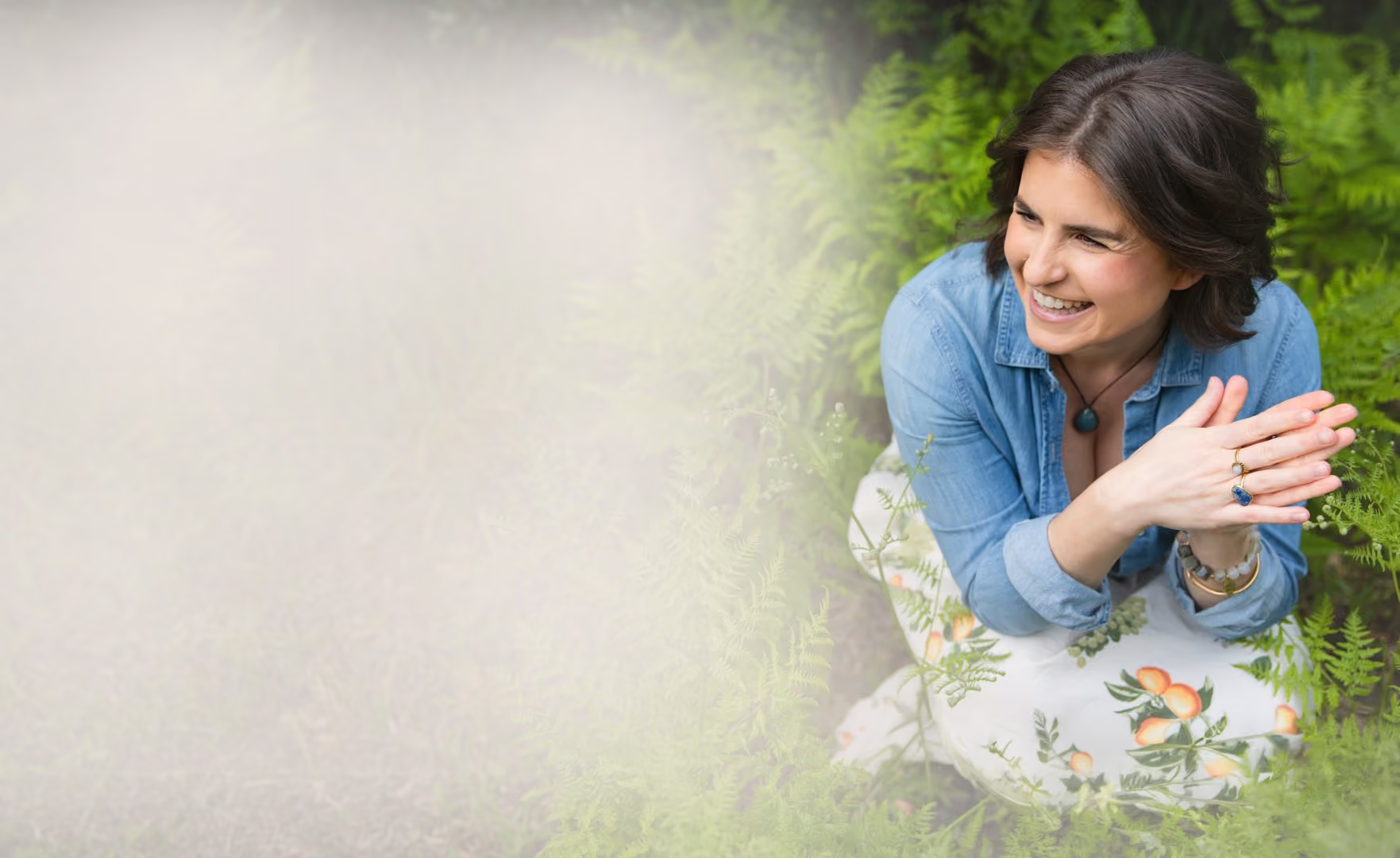
Leah Hoffman in a denim shirt and floral skirt sitting among green ferns outdoors.

Frequently Asked Questions

A Few Things Worth Knowing

Do you provide psychedelic substances?

No. I do not provide, prescribe, or encourage the use of any substances. My role is to support preparation, integration, and therapeutic work around your experience. Any work involving altered states of consciousness is approached through a framework of harm reduction, thoughtful preparation, and meaningful integration.

How do I know if this work is a good fit for me?

This work tends to be a good fit for people who are already engaged in their own growth and are looking for deeper access to emotional material, trauma work, or relational patterns that have been difficult to shift. If your curiosity has been sparked and you're wondering whether this work might be right for you, reach out. We can talk through where you are and what you're hoping for, and figure out together whether this is the right next step.

What should I think about before exploring this work?

Psychedelic experiences and altered states can bring up powerful emotional, psychological, and relational material. There are a number of factors worth considering before this kind of work, including your mental health history, current life circumstances, support systems, intentions, and what you may already be carrying emotionally. This work asks a lot of people. It can be deeply supportive, and it can also surface things that take time to move through.

Some experiences are also not appropriate for everyone, and certain medical, psychological, or situational factors may make this work less suitable. These are conversations worth having before any work begins, which is part of why I work in an inquiry-first way. If you're curious about whether this could be supportive for you, reach out and we can talk through what you're thinking about and where you are in your process.